



Ligustrum but I've always used, this is the only survivor, now know who has samias for sale?
I see but maybe they were infected by a bacteria as some suggested me in the old discussion.
Good luck and hope you will found some eggs again soon.
Lorenzo
Ligustrum but I've always used, this is the only survivor, now know who has samias for sale?
I see but maybe they were infected by a bacteria as some suggested me in the old discussion.
Good luck and hope you will found some eggs again soon.
Lorenzo
Catopsilia florella seems to be yellower, but I don't know if your photo is darker than the real colour of the specimen.
thanks
You're welcome. When I switched to Ligustrum, I had no more problems.
Hello,
I think you should try to post this in the Marketplace, Want to buy section.
Unfortunately, I don't have any eggs of this species, anyway I'm sure someone can help you.
Best wishes for your research and your thesis,
Lorenzo
Yes he can of course
I think it has been a case, but if you have higher temperatures, they will emerge faster in greater number.
Hello
I had some troubles last year with Samia ricini.
See the thread opened by me: click here.
Lorenzo
I don't have any experience with breeding Samia cynthia on Eucalyptus gunnii, but it seems to be that that's also possible...
Hi,
I think Eucalyptus gunnii could be tried but of course it shouldn't be used to feed species like Samia cynthia if you have Prunus laurocerasus or Ligustrum available.
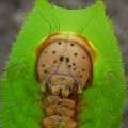
two years ago i breed them on Prunus laurocerasus. Its green whole winter long. Hope you find some.
However, I had some problems last years with Prunus laurocerasus and Samia ricini, so I had to switch to Ligustrum. I don't know what was happened, but I only saw the larvae dieing with apparently no reason. Click here to see an old thread opened by me last year on this argument.

Since 2 weeks a feed Bunaea alcinoe on Ligustrum. With us, it is very cold, too. The leaves are a little bit soft, but it works very well.
Yes, I'm breeding this species too with Ligustrum and they're growing fast and well.
Of course I think Ligustrum is the best foodplant for Samia cynthia.
So just go on this way and some will surely start emerging.
However, it is difficult with this species to have male and female hatching at the same time so you could see moths emerging at different times. That's why it's difficult to obtain mating sometimes, especially in winter.
Hello
You should increase the temperature as Fabio has already said. 22°C is not enough.
Keep on spraying them with water because they need much humidity if you want to make them emerge faster. However, it seems that you're doing well.
Regards,
Lorenzo

I keep the kokons in a semi-transparent plastic box, about 40 x 50 cm and 30 cm high. Inside of it, I put a thick layer of kitchen paper, which I keep wet all the time and change it sometimes. The walls of the box I cover with hessian or other rough drapery, fixed by a rope around the box. The box is covered with also fixed gauze and finally with the cap. Kokons I fix at the hessian-wall, pupae I lay on the paper-ground. Moths can easily climb on the walls and hang there or on the top to emerge their wings.
Hello Andreas,
Many thanks for your answer. Usually, developing your own method is better than to use "professional" methods. In fact, I wanted to know more about yours to improve mine. I'm using a very similar method to keep wet the pupae of Gonimbrasia zambesina, Bunaea aslauga and Gynanisa maja, but instead of put a thick layer of kitchen paper, I put another little container with hot water - that I change three times a day or more - below the pupae, keeping them on a net layer suspended over the water so the pupae can't touch directly it.
Best regards,
Lorenzo
Ich hatte letztes Jahr Bunaea alcinoe und wartete ewig auf das Schlüpfen. Ich hielt sie im mäßig beheizten Arbeitszimmer so um die 20 °C (15 -24 ° C) und relativ trocken, nichts passierte. Erst als ich sie nach einigen Monaten zu meinen Attacus Kokons in eine geschlossene Plastikbox auf Fussbodenheizung im Badezimmer mit nahezu 100 % Luftfeuchtigkeit legte, schlüpften die Falter nach wenigen Tagen.
Hello Andreas,
could you describe better this method of keeping the pupae? How the moths could climb to inflate their wings if they were kept in a closed container?
Maybe I have not understand this because I used google translate (I don't understand German), anyway, how did you get that umidity? Did you put them in water? Did you sprayed them with water?
Many thanks,
Lorenzo
Hello,
in winter you can breed many Automeris species with Ligustrum.
Antherina suraka and Bunaea alcinoe do well on privet too.
Regards,
Lorenzo
Hello
this is Bunaea alcinoe.
Regards,
Lorenzo

Hi Klaus!
Ich habe das selbe mit Liguster und A. mimosae gehört. Es geht sogar so weit, dass auf Youtube ein Video mit A. mimosae Raupen ist, wo diese an Hainbuche knabbern! Es würde mich ebenfalls sehr interessieren, was ihr da für Erfahrungen gemacht habt.
Hier der Link: http://www.youtube.com/watch?v=Z_bSJB1jggg
Hello Sebastian,
I am the author of this video on youtube. Larvae arrived L3 then started dying. So Carpinus betulus is not a foodplants to use when you breed Argema mimosae (and also mittrei). I explained my experience in my blog (Italian language, sorry!).
I think Argema mittrei should not be reared on Ligustrum, but only on Eucalyptus gunni and Liquidamber to obtain good results.
Best regards,
Lorenzo

Meine kleinen haben innerhalb von Stunden zu fressen begonnen!
Musste für die 15 Raupen heute schon wieder Futter holen!
mfg, mondvogel99
Hello,
did they accept Juglans regia?
Lorenzo
Hi!
Bis jetzt, ein recht guter Bericht. Du scheinst alles richtig zu machen, deine Räupchen sehen gut aus!
Meine sind auch heute geschlüpft, ich hoffe sie fressen, was ich ihnen gegeben habe (Walnuss). Denn sonst habe ich leider keine anderen Möglichkeiten, was das Futter betrifft!
mfg, mondvogel99
Hello,
here I'm rearing Argema mimosae on Liquidambar styraciflua and Carpinus betulus. Larvae on Liquidamber (L3) do well and grow very fast (I also reared this species last month and now I have cocoons), instead larvae on Carpinus betulus (L1-L2), which is not listed as an Argema mimosae foodplant, are growing slower than others. I don't think Carpinus is a good foodplant, as I have had many loss (4 of 20 died). Anyway, Juglans regia was refused by my larvae, so you could try with Carpinus if you don't have Liquidamber, Euc. gunnii and other foodplants cited for mimosae.
Lorenzo
Many thanks, this helps a lot!
Those photos were taken by a friend of mine during his holiday in Africa, but I don't know exactly where...
I don't know african species, so I'm asking for identification of those butteflies.
1-2: same species here.
3: ?
4: ?
Thanks Lucas,
so I will try to obtain some eggs from this butterfly house I visited.
